
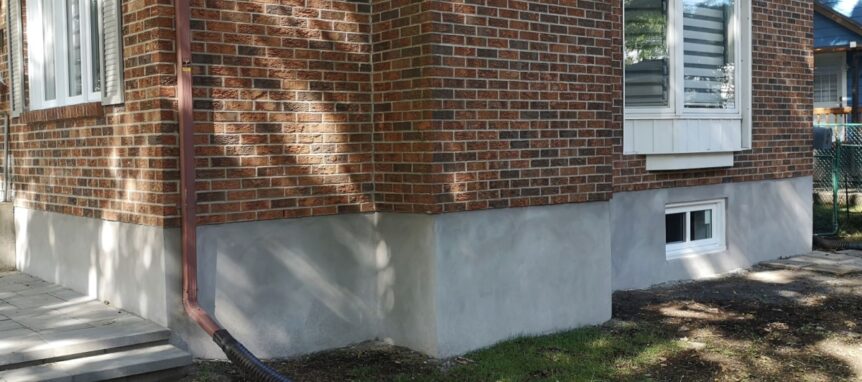
Concrete parging is commonly used to give foundation walls a smooth, finished appearance while providing an extra layer of protection against the elements. While it can enhance both the look and durability of a home’s exterior, parging is not a permanent solution. Over time, it can crack, chip, or separate from the surface beneath it, leaving the underlying masonry exposed.
Understanding why parging fails and how to repair it correctly is essential for maintaining both the appearance and integrity of your foundation. In a climate like Toronto’s, where moisture and temperature fluctuations are constant, proper installation and maintenance make all the difference.
What Is Concrete Parging?
Parging is a thin layer of mortar or cement applied to masonry surfaces, most often foundation walls. Its primary purpose is to create a uniform, finished look while offering a degree of protection against weather exposure. It can also help seal minor surface imperfections and improve the overall appearance of older or uneven masonry.
While parging can provide some protective benefits, it is not a structural component. Its effectiveness depends largely on how well it is applied and how well the underlying surface is prepared.
Common Reasons Parging Fails
Parging failure is often the result of poor preparation or environmental stress. One of the most common causes is improper surface preparation before application. If the underlying masonry is dirty, loose, or not properly bonded, the parging will not adhere correctly and may begin to separate over time.
Moisture is another major factor. Water can become trapped between the parging layer and the foundation wall, especially if the surface was damp during application or if drainage issues are present. As temperatures drop, this trapped moisture freezes and expands, causing the parging to crack and break away.
Temperature fluctuations also play a significant role. Expansion and contraction from seasonal changes create stress within the parging layer, particularly if the material lacks flexibility. Over time, this stress leads to visible cracking and eventual failure.
In some cases, using the wrong mix or applying parging too thin or too thick can also contribute to its deterioration. Without the proper balance of materials and application techniques, the finish simply won’t hold up under real-world conditions.
Signs Your Parging Is Failing
Failing parging is usually easy to identify once you know what to look for. Cracks are often the first visible sign, ranging from hairline fractures to larger splits across the surface. As the damage progresses, sections of parging may begin to bulge, flake, or completely detach from the wall.
You may also notice areas where the parging sounds hollow when tapped, indicating that it has lost adhesion to the underlying surface. Discoloration or moisture staining can also signal that water is getting behind the parging layer.
While these issues may initially appear cosmetic, they can expose the foundation to further moisture damage if left unaddressed.
How to Repair Parging Properly
Proper repair begins with removing all loose or damaged material. Simply patching over failing parging will not solve the underlying issue and will likely lead to further deterioration. The surface must be cleaned thoroughly and prepared to ensure a strong bond with the new material.
Once the surface is properly prepared, a new parging mix is applied using the correct thickness and technique. Professional application ensures even coverage, proper adhesion, and a finish that can withstand environmental stress. In some cases, bonding agents or additives may be used to improve durability and flexibility.
Addressing underlying moisture issues is also critical. Repairs should include evaluating drainage around the foundation, sealing cracks, and ensuring that water is directed away from the structure. Without resolving these contributing factors, even well-applied parging can fail again over time.
Preventing Future Parging Problems
Preventing parging failure starts with proper installation and ongoing maintenance. Ensuring the surface is clean and structurally sound before application is essential. Choosing the right materials for the local climate also helps improve long-term performance.
Regular inspections allow homeowners to catch early signs of damage before they worsen. Maintaining proper drainage around the home reduces moisture exposure, which is one of the primary causes of failure. Small repairs made early can extend the life of the parging and protect the foundation beneath it.
Restoring Your Foundation the Right Way
Concrete parging plays an important role in protecting and enhancing your home’s foundation, but when it fails, it needs to be repaired correctly to avoid ongoing issues. Taking the time to address the root causes of failure ensures that repairs last and that your foundation remains protected.
If your parging is cracking, peeling, or separating from your foundation, professional evaluation is the best next step. For expert parging repair and masonry services, contact Turnbull Masonry. Their experienced team can restore your foundation with durable, high-quality workmanship designed to stand up to Toronto’s climate.